the man
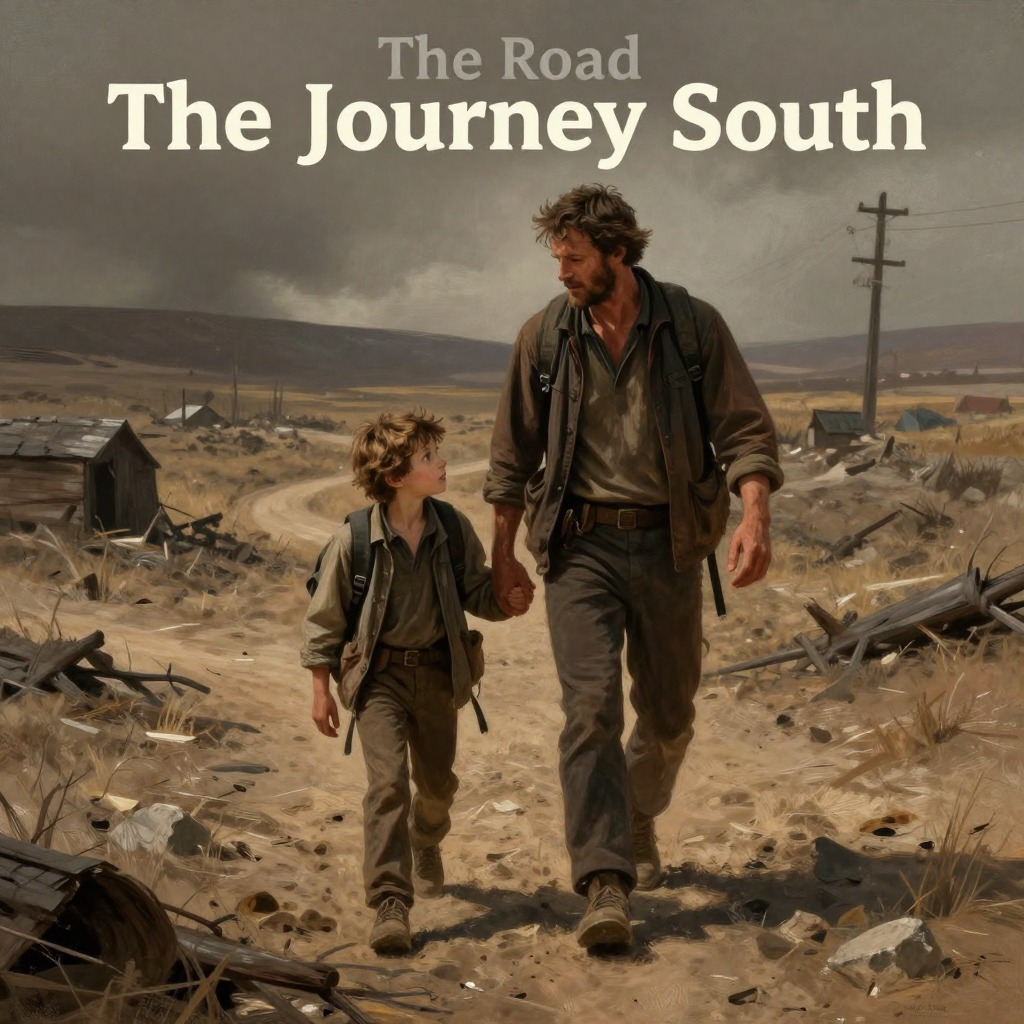
The man is the unnamed father at the center of Cormac McCarthy's The Road, a figure whose entire existence is consumed by the single imperative of protecting his young son in a world reduced to ash and ruin. He is the boy's sole guardian, teacher, and moral arbiter, pushing a grocery cart southward through a barren, godless landscape in the hope of finding warmth and sustenance. His journey is a relentless test of physical endurance and ethical resolve, marked by acts of violence, moments of profound tenderness, and a slow, inexorable decline that ends with his death, leaving the boy to face the world alone.
Identity and Background
The man is a survivor of the unnamed catastrophe that ended the world, a former inhabitant of a now-ruined house where he grew up. He remembers a past of relative normalcy—a childhood of perfect days spent on a lake with his uncle, a wife he loved and lost to suicide, and a son born into the chaos. He carries the weight of these memories, which surface in dreams and daydreams, but he is defined more by his present role than his past. He is a father first, a protector second, and a man who has learned to distrust hope, believing that "the right dreams for a man in peril were dreams of peril." His identity is forged in the crucible of the road, where he becomes a figure of grim determination, capable of both ruthless violence and deep, abiding love.
Arc Through the Plot
The man's arc is a trajectory from desperate hope to quiet acceptance of death. He begins the journey with a clear goal: to reach the coast, believing that everything depends on it. He is active, resourceful, and fiercely protective, scavenging for food, repairing the cart, and confronting threats with a pistol that holds only two bullets. As the journey wears on, his physical condition deteriorates—a persistent cough worsens, he spits blood, and his strength wanes. He is forced to confront his own mortality, especially after being shot with an arrow and after the boy falls gravely ill. The discovery of the bunker offers a temporary reprieve, a "tiny paradise" of canned goods and warmth, but it cannot halt his decline. In the final days, he becomes too weak to continue, and he dies in the woods, leaving the boy to carry on. His arc is not one of triumph but of endurance, a slow relinquishing of control as he prepares his son for a world without him.
Key Actions and Objectives
The man's primary objective is survival—his own and, more importantly, the boy's. This drives every action: pushing the cart, scavenging for food, building fires, and navigating the treacherous landscape. He is a man of practical competence, able to repair the cart's wheel, suture his own leg wound, and fashion a lamp from a bottle and gasoline. He is also capable of extreme violence, killing a roadagent who threatens the boy with a knife and later threatening a thief with the same pistol. Yet his actions are always tempered by a moral code. He refuses to eat human flesh, insists that they are "the good guys," and teaches the boy that they "wouldnt ever eat anybody." His most significant actions are acts of love: holding the boy through the night, washing the dead man's brains from his hair, and, in his final moments, urging the boy to carry the fire and continue south.
Relationships and Conflict
The central relationship of the man's life is with his son. The boy is his "warrant," the reason he continues, and the only thing that stands between him and death. The man's love for the boy is absolute, but it is also a source of profound conflict. He must balance his protective instincts with the need to prepare the boy for a brutal world, teaching him to use the pistol and to be vigilant. The boy's compassion—his desire to help the lightning-struck man, the old man Ely, and the thief—often clashes with the man's pragmatic ruthlessness. The man is forced to harden himself, telling the boy they cannot help the dying man and stripping the thief naked in the road. This tension is the novel's moral core, as the man struggles to preserve the boy's goodness while ensuring his survival. His relationship with his wife is a ghost that haunts him; her suicide, which he could not prevent, is a wound that never heals, and he carries her photograph until he finally leaves it in the road.
Change and Ending
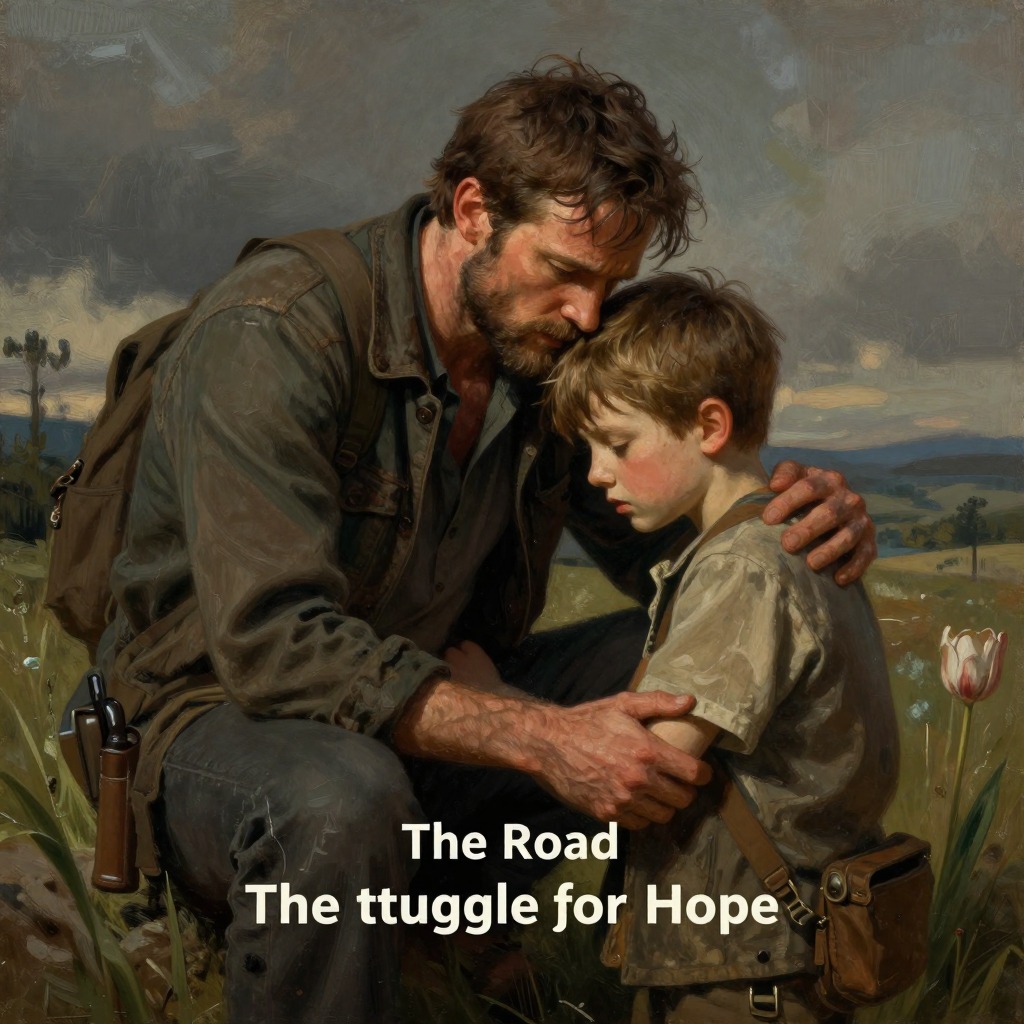
The man changes less than he is worn down. He begins as a figure of fierce determination and ends as a dying man, reduced to a racking cough and a body that can no longer obey his will. His moral certainties are tested but not broken; he remains committed to the idea that they are "the good guys" and that they carry the fire. The most significant change is his acceptance of his own death. He tells the boy, "You need to go on," and prepares him for the separation, promising that they can still talk. In his final moments, he lies in the woods, wrapped in blankets, and dies. The boy stays with him for three days before a stranger arrives. The man's death is not a defeat but a passing of the torch; he has done all he can, and the boy is ready to continue.
Thematic Significance
The man embodies the novel's central themes of love, duty, and the struggle to maintain humanity in a world stripped of it. He is a figure of almost mythic endurance, a father who will kill to protect his child and who teaches him that goodness is a choice. His relationship with the boy is the novel's only source of warmth, a fragile flame in the darkness. The man's insistence that they are "carrying the fire"—a metaphor for hope, morality, and the human spirit—is the novel's most powerful statement. His death is not an end but a transition, as the boy takes up the fire and continues the journey. The man's legacy is not in what he found but in what he preserved: the boy's capacity for compassion and his belief that there are still good people in the world.